
To become an AI trainer with no experience, you need three things: expertise in any subject (teaching, nursing, law, writing — not AI), strong written English, and the ability to pass a platform’s quality assessment. Most people apply to platforms like DataAnnotation, Outlier, or Mindrift and land their first paid task within one to two weeks. No degree, no coding, and no AI background required.
Here’s the part that surprises people: becoming an AI trainer with no experience isn’t the exception, it’s the norm. The AI companies hiring for these roles aren’t looking for programmers. They’re looking for people who know a subject well enough to tell when an AI gets it wrong.
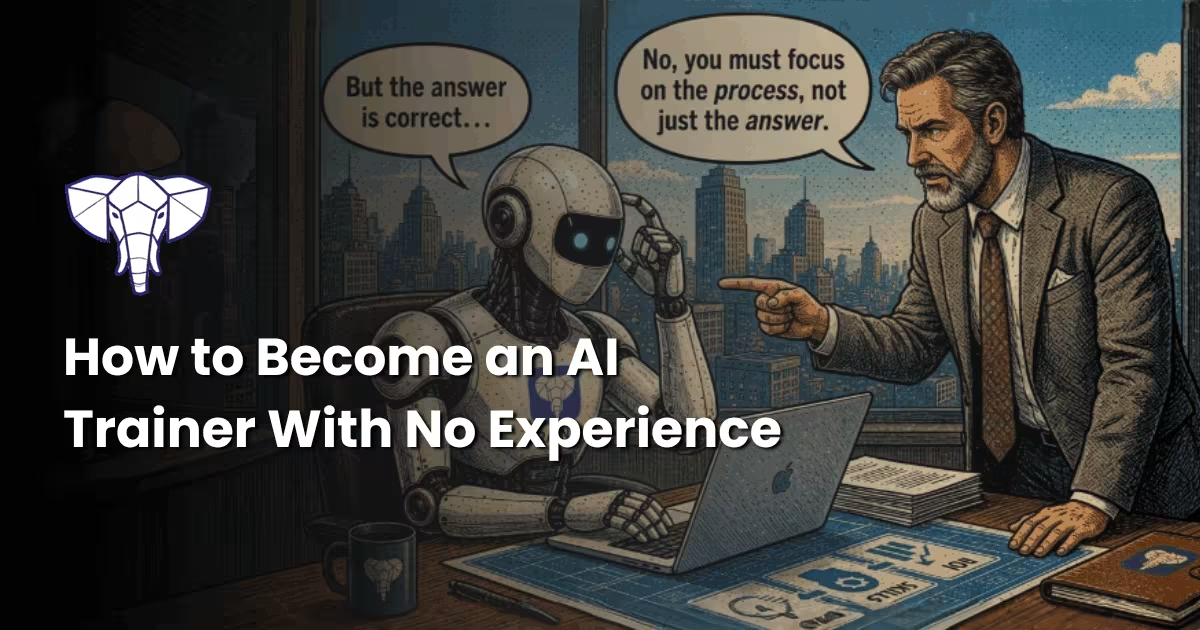
That’s the whole job, really. You won’t be building models or writing code. You’ll be reading an AI’s attempt at something — a piece of writing, a maths problem, a coding answer, a customer reply — and judging whether it’s actually any good. Your knowledge of a field is the training data.
Quick clarification before we go further, because the term gets muddled: this guide is about training the AI models (also called data annotation, AI evaluation, or RLHF work) — not about becoming an instructor who teaches people how to use AI. Two very different jobs that share an unfortunate name.
What an AI Trainer Actually Does All Day
Strip away the jargon and the work is fairly intuitive. On any given task you might be:
- Rating and ranking outputs — the AI gives two answers; you decide which is better and why. This is the core of what’s called RLHF (reinforcement learning from human feedback).
- Correcting mistakes — spotting where a response is wrong, lazy, biased, or subtly misleading, and explaining the fix.
- Labelling or annotating data — tagging images, classifying text, transcribing audio, so a model can learn the pattern.
- Trying to break the model — deliberately writing tricky prompts to expose where it fails (often called red-teaming).
The common thread is judgement. A machine can produce plausible-sounding text all day. Only a human who actually understands the subject can tell when “plausible” is quietly, dangerously wrong.
Why “No Experience” Genuinely Isn’t a Problem
When platforms say no experience required, they mean no AI experience. What they need instead is domain expertise — and you almost certainly already have some.
Ten years teaching primary maths? That’s expertise in explaining concepts clearly. Worked in nursing, law, accounting, or customer service? That’s specialist knowledge AI companies pay a premium for. Even fluency in a second language is in demand for multilingual training work.
You don’t need a degree, and credentials matter less than you’d expect here. What matters is whether you can reliably catch errors in your field and explain your reasoning. If you can read something in your area and instantly sense when it’s off, you have what the role requires.
The Skills That Actually Matter
Three things separate trainers who last from those who don’t:
Strong written English. Most platforms require native or near-native fluency, because the job is largely about writing clear explanations and feedback.
Genuine attention to detail. Small errors compound in training data. People who rush and skim tend not to pass the quality bar.
Independent judgement. You’re not just following a checklist, you’re often deciding what “good” even looks like, and defending that call.
How to Actually Get Started
The path here is refreshingly short compared to most career changes. Realistically, many people land their first paid tasks within a week or two.
1. Name your expertise. Before applying anywhere, get clear on what you bring — your industry, your strongest subjects, any languages you speak fluently. This determines which projects you’ll qualify for and how much you’ll earn.
2. Build a bit of context first. You don’t need a qualification, but understanding the basics of how AI models learn makes the work far easier. An AI learning course for beginners is enough to stop the terminology feeling foreign before you sit an assessment.
3. Pick two or three platforms and apply. Don’t put all your hopes on one. Well-known options include DataAnnotation, Outlier, Mindrift, and Appen, alongside aggregators that list openings across many platforms at once. Freelance marketplaces like Upwork also carry AI training gigs.
4. Pass the assessment. This is the real gate. Most platforms skip the traditional interview entirely, instead you complete a written test or sample task that checks whether you can follow guidelines accurately. Prioritise accuracy over speed; this is what gets you accepted.
5. Start small, build a track record. Early tasks are often general. As your quality ratings climb, higher-paying, more specialised work opens up.
If you’re weighing this against other ways into the field, it’s worth reading our broader guide on starting an AI career with no experience, which maps out the other entry-level roles this one sits alongside.
How Much Do AI Trainers Earn in the UK? (2026)
AI trainers in the UK typically earn £15–£30 per hour depending on expertise. Entry-level annotation work starts around £12–£17 per hour, general AI evaluation pays £17–£25, and specialist domains (coding, medicine, law, advanced maths, chemistry) reach £30+ per hour on platforms like DataAnnotation. Full-time equivalents range from roughly £26,000 to £54,000 per year.
Treat these as markers rather than promises — pay varies by platform, task type, and how consistently you work:
| Level | Typical UK rate | What the work looks like |
|---|---|---|
| Entry: data annotation / labelling | £12–£17/hr | Tagging images, classifying text, transcription |
| General AI evaluation | £17–£25/hr | Rating and correcting AI responses, RLHF tasks |
| Domain specialist | £30+/hr | Expert evaluation in coding, medicine, law, STEM |
| Reviewer / QA roles | Top of range | Checking other trainers’ work after a strong track record |
Two things move your income more than anything else. The first is specialist knowledge: UK job listings for chemistry, maths, and analyst AI-trainer roles regularly start above £30 per hour, roughly double general annotation rates. The second is your quality rating — platforms route the better-paid projects to trainers with a consistent accuracy record, which is why rushing early tasks is a false economy.
For context, Glassdoor puts the average UK AI trainer at around £40,000 a year, with the top of the range above £54,000 — though most people start part-time and treat those figures as a ceiling to grow into rather than a starting point.
A Word on Scams
Because these roles are remote and beginner-friendly, they attract imitators. The rule is simple: a legitimate platform never asks you to pay to join or “unlock” work. No genuine AI training company charges a joining fee. If money is flowing from you to them, walk away.
Where This Can Lead
AI training isn’t only a side income, for some it’s a doorway. There’s a real progression from annotator, to trainer handling more complex evaluation, to specialist roles in model alignment and RLHF. Understanding emerging concepts like AI agents gives you an edge as projects grow more complex. Each rung builds on the judgement you develop doing the work, not on a certificate you bought beforehand.
Ready to Build the Foundation First?
The strongest applicants are the ones who understand what they’re evaluating. Before you apply, a few hours of solid AI literacy makes the assessments noticeably easier, and your work noticeably better.
Get the fundamentals down, then go land your first project with confidence.
Frequently Asked Questions
-
How do I become an AI trainer?
Identify your strongest subject area, learn basic AI literacy (a short free beginners course is enough), apply to two or three platforms such as DataAnnotation, Outlier, Mindrift or Appen, and pass their written assessment. There is no interview in the traditional sense — the assessment is the gate, and accuracy matters more than speed.
-
Can I become an AI trainer with no experience?
Yes. “No experience” requirements refer to AI experience specifically. Platforms need domain expertise — teaching, healthcare, law, languages, customer service — paired with strong written English and attention to detail. Most successful applicants have never worked in tech.
-
Do I need a degree to become an AI trainer?
No degree is required for most AI training work. Platforms evaluate your assessment performance, not your CV. That said, a degree or professional background in a specialist field (medicine, law, STEM) qualifies you for higher-paying expert projects.
-
How much do AI trainers make in the UK?
Typically £15–£30 per hour. Entry-level annotation starts around £12–£17, general evaluation £17–£25, and specialist domain work £30+ per hour. Full-time equivalents range from about £26,000 to £54,000 per year.
-
Is AI training a real job or a scam?
AI training is a real and growing job category — but scams imitate it. The rule: a legitimate platform never asks you to pay to join or unlock work. If money flows from you to them, walk away.
-
How long does it take to start earning as an AI trainer?
Typically one to four weeks: applications take days, assessments can usually be completed immediately, and platforms approve strong candidates quickly. Many people complete their first paid task within two weeks of applying.
-
Do AI trainers need to know coding?
No. Coding is only needed if you choose coding-related projects — where it becomes a premium skill commanding £30+ per hour. General evaluation, writing, and annotation work require no programming at all.
The Bottom Line
Becoming an AI trainer with no experience comes down to one honest exchange: the industry needs human judgement it can’t manufacture, and you have a field you understand better than a machine does. Add a little AI literacy, pass an assessment, and you’re in.
The people already doing this didn’t wait until they felt qualified. They applied, learned on the job, and let the work prove what a CV couldn’t.