Ask most business leaders who needs AI training, and the answer comes back quickly: the technical teams, obviously. The developers, the data people, maybe whoever runs the analytics dashboard.
It’s a tidy answer. It’s also mostly wrong.
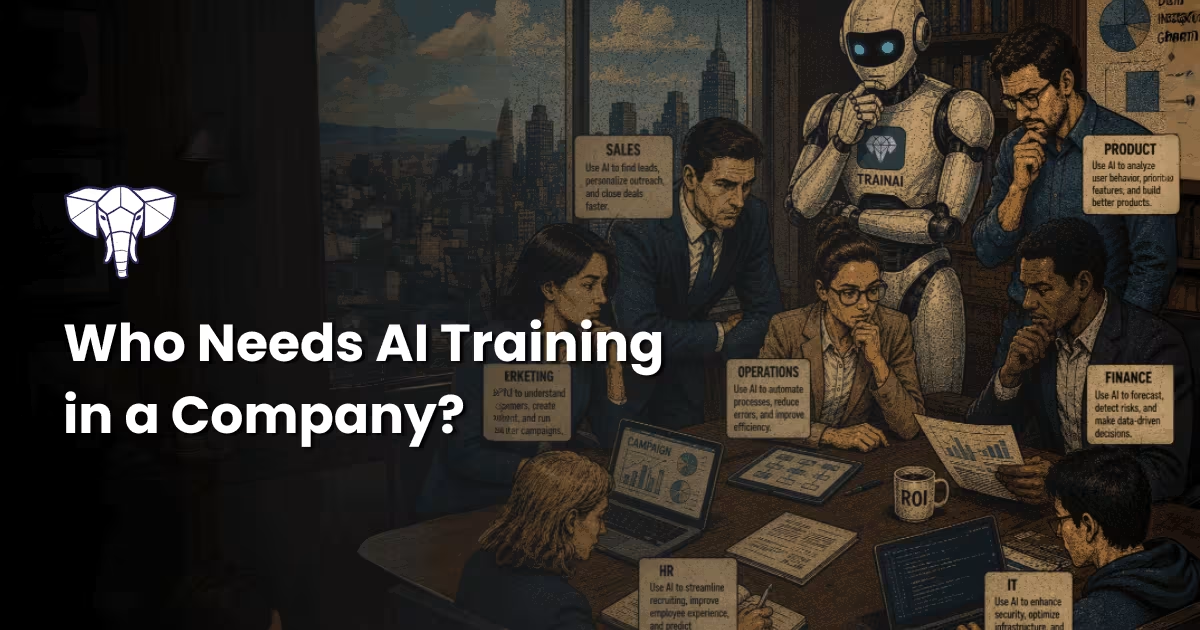
The teams quietly getting the most value from AI right now aren’t the engineers, they’ve often been experimenting for years. It’s the marketers, the HR coordinators, the finance analysts, and the operations managers who are discovering that a tool they assumed was “for techies” can rewrite their entire afternoon. The question isn’t really who needs AI training. It’s who’s currently being left out of it — and the answer is usually “most of the building.”
Let’s go department by department.
The Short Version
Almost everyone who works with information needs some form of AI training. The type and depth differ enormously by role, but the baseline question — “can this person use AI safely and effectively in their job?” — applies far more widely than most organisations assume.
Here’s who that actually means.
Marketing and Content Teams
This is often where AI lands first and lands hardest. Drafting, ideation, repurposing, audience research, ad variations — the use cases are endless and immediate.
But “we already use ChatGPT” is not the same as being trained. The marketers who get real leverage are the ones who know how to brief a model properly, fact-check its claims, keep brand voice intact, and avoid the slightly-off, generic output that audiences now recognise instantly. Without training, marketing teams tend to produce more content of lower quality — which is the opposite of the goal.
HR and People Teams
One of the most underrated groups. HR teams handle screening, job descriptions, policy drafting, onboarding materials, and internal communications — all of which AI can accelerate.
But HR is also where the risk is highest. Feed candidate data into the wrong tool, or let a model introduce bias into shortlisting, and you’ve created a legal and ethical problem, not a productivity gain. HR teams need training that’s as much about responsible and compliant use as it is about speed.
Finance and Operations
Reporting, reconciliation, summarising long documents, drafting process documentation, spotting anomalies in data — finance and ops teams sit on a mountain of repetitive, structured work that AI handles well.
The barrier here is rarely interest; it’s confidence. These are roles where accuracy is non-negotiable, so people are understandably cautious. Good training gives them what they actually need: a clear sense of where AI is reliable, where it isn’t, and how to verify outputs before anything touches a real decision.
Sales and Customer-Facing Teams
Faster proposals, personalised outreach, instant call summaries, smarter CRM notes. Sales teams that train properly free up hours that go straight back into actual selling.
The training emphasis here is on judgement — knowing what’s appropriate to automate in a customer relationship and what absolutely isn’t. A generic AI-written message to a key account can do more damage than no message at all.
Leadership and Management
The group most often skipped — and the one whose absence quietly sinks the whole effort.
Leaders don’t necessarily need to become power users. But they do need enough literacy to set strategy, make sensible investment decisions, model the behaviour, and avoid signing off on tools they don’t understand. When managers are trained first, adoption across their teams follows. When they aren’t, even excellent training tends to fade by the following week. We’ve written more about getting this sequencing right in our guide to how to implement AI training programs in workplaces.
The Technical Teams (Yes, Them Too)
Engineers and data specialists aren’t exempt, their needs are just different. They’re less interested in “what is a prompt” and more in model configuration, automation design, API integration, and deployment considerations. The mistake is assuming their existing comfort with AI means there’s nothing left to formalise.
So, Who Doesn’t Need It?
A fair question. Genuinely, very few people in a modern company sit entirely outside the scope. If a role involves no documents, no email, no data, and no customer communication, you can probably skip it. For everyone else, the realistic answer is some level of training — even if it’s only foundational literacy and a clear understanding of what not to put into a chatbot.
The depth should scale with the role. A warehouse operative and a marketing lead don’t need the same programme. But “doesn’t need any” is a far smaller category than most businesses assume.
The Real Risk Isn’t Who You Train, It’s Who You Forget!
Here’s the pattern we see repeatedly. A company trains its “obvious” candidates, declares the box ticked, and leaves whole departments to figure AI out on their own. Those untrained teams don’t stop using AI — they just use it informally, inconsistently, and often unsafely. That’s where the data leaks, the brand-voice disasters, and the quietly-wrong reports come from.
Training isn’t only about unlocking productivity. It’s about making sure that the AI use already happening in your organisation, and it is already happening — is happening on purpose.
Not Sure Who in Your Team Needs It Most?
That’s usually the right place to start. The first step in any rollout is working out where the gaps actually are and they’re rarely where leadership expects.
This is exactly where structured AI training for business earns its place: identifying the right people, matching the right depth of training to each role, and turning scattered, informal AI use into something safe and measurable.
Ready To Transform Your Business?
Leave your details and we’ll call you back to talk through what AI training could look like for your team.
Tell us about your team and we’ll help you map who needs what.
The Bottom Line
Who needs AI training in a company? Far more people than the job titles suggest. Not everyone needs to become an expert, but almost everyone needs enough to work safely and effectively alongside tools they’re already, in many cases, quietly using.
The companies pulling ahead aren’t the ones who trained their engineers. They’re the ones who realised the engineers were never the point.